Cambodia Travel Guide: Ancient Temples, Khmer Culture & Where to Go
There are destinations you visit for beautiful scenery, and then there are destinations that seem to transport you into another era entirely. Cambodia belongs firmly in the latter category.
Best known for the magnificent temples of Angkor, Cambodia offers far more than its most photographed landmark. Ancient Khmer architecture emerges from dense jungle, saffron-robed monks move quietly through centuries-old temples, lively markets fill with the scent of lemongrass and grilled meats, and a new generation of chefs, artists, and designers is reshaping how travelers experience the country.
Cambodia also carries a complicated history. Its extraordinary Khmer heritage exists alongside the lasting impact of the Khmer Rouge era, making a trip here one that can be beautiful, fascinating, sobering, and deeply meaningful all at once.
For travelers planning a larger Southeast Asia itinerary, Cambodia is especially compelling. A few days exploring Angkor can pair beautifully with Thailand's beaches, Vietnam's culinary scene, or Singapore's polished city energy.
Cambodia at a Glance
Best for: History lovers, cultural travelers, archaeology, food, photography, adventure, and multi-country Southeast Asia trips
Best time to visit: November through February generally offers the most comfortable weather, with lower humidity and cooler temperatures.
How long to stay: 4 to 7 days works well for a first trip, depending on whether you visit Siem Reap alone or combine it with Phnom Penh.
Top destinations: Siem Reap and Phnom Penh
Known for: Angkor Wat, Khmer architecture, Buddhist culture, Tonlé Sap Lake, Cambodian cuisine, traditional arts, and a complex modern history
Pairs well with: Thailand, Vietnam, Laos, Singapore, and Hong Kong
Why Visit Cambodia?
Cambodia is home to one of Southeast Asia's most extraordinary concentrations of history and architecture.
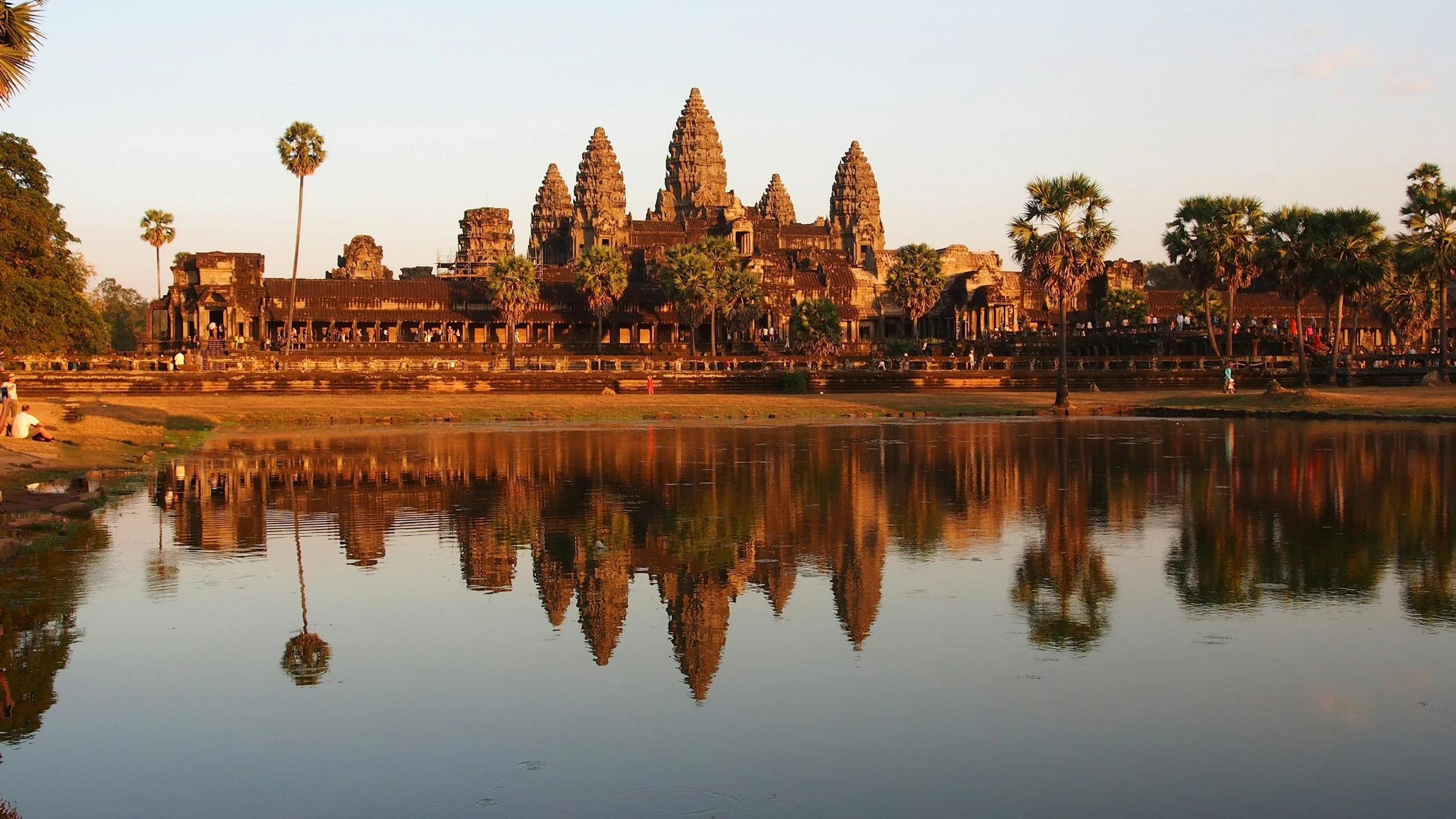
The UNESCO-listed Angkor Archaeological Park encompasses roughly 400 square kilometers and preserves the remains of successive capitals of the Khmer Empire, which flourished between the 9th and 15th centuries. Its temples, reservoirs, canals, roads, and former urban centers reveal just how sophisticated Khmer civilization became.
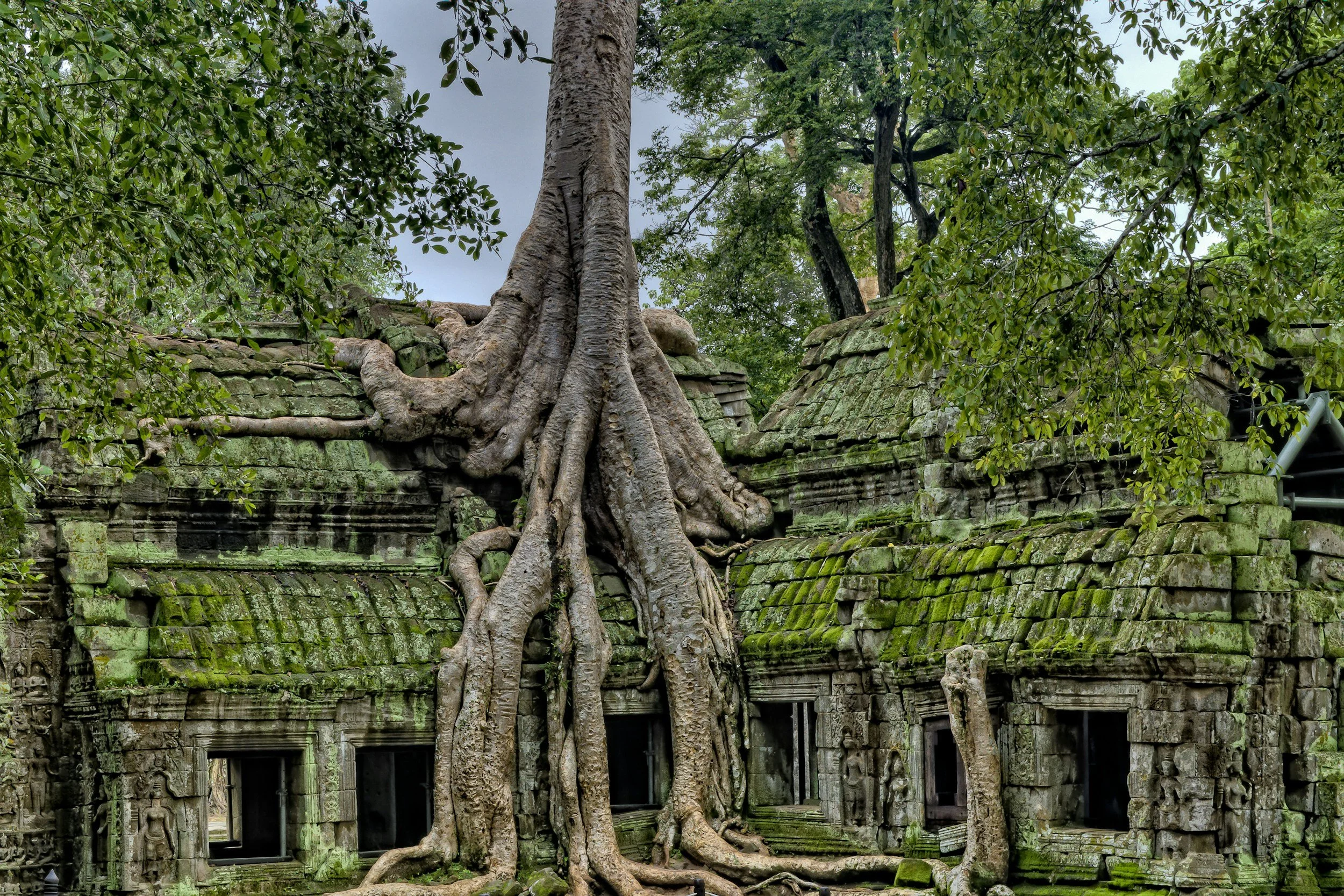
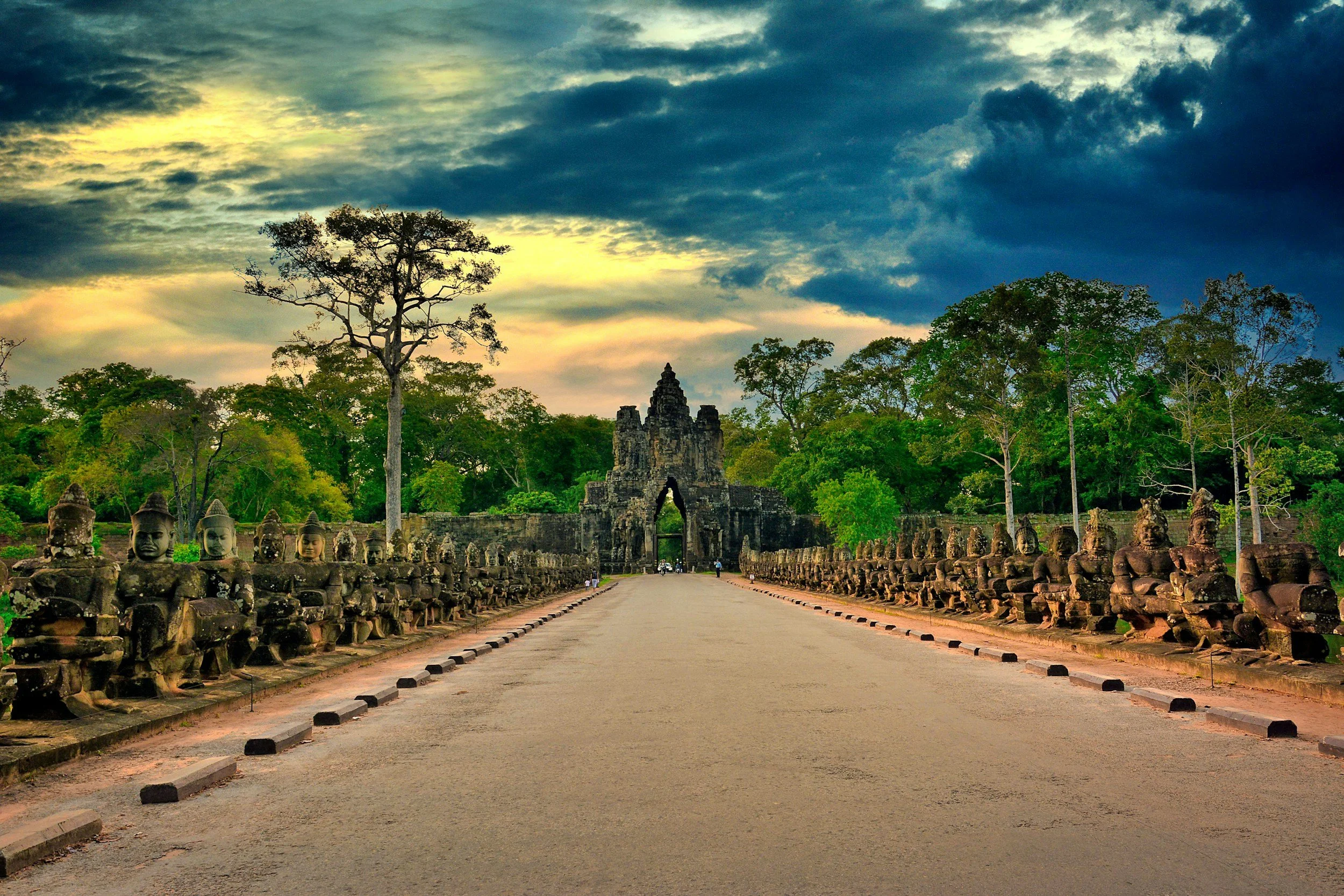
Angkor Wat may be the headline attraction, but the experience extends far beyond a single temple. There is the mysterious Bayon, covered in enormous carved faces; Ta Prohm, where tree roots envelop ancient stone; intricately carved Banteay Srei; and dozens of lesser-visited ruins scattered throughout the countryside.
Cambodia's appeal is not limited to its ancient past either. Siem Reap has evolved into a lively cultural destination with boutique hotels, galleries, restaurants, markets, and contemporary Cambodian design. Phnom Penh offers an entirely different perspective, combining royal architecture and Khmer art with a sobering look at the country's 20th-century history.
The result is a destination that rewards travelers willing to look beyond Angkor Wat.
A Brief History of Cambodia
Understanding Cambodia's history adds an entirely different dimension to visiting the country.
The Khmer Empire became one of Southeast Asia's dominant civilizations beginning in the 9th century. Angkor served as its political and religious heart for centuries, supported by an extraordinary system of reservoirs, canals, and other hydraulic infrastructure. UNESCO describes the archaeological landscape today as encompassing temples, ancient urban plans, communication routes, and extensive waterworks.
By the 15th century, the center of Khmer political power had shifted south. Centuries of regional pressure eventually gave way to French colonial rule, followed by independence in 1953.
Cambodia's darkest modern chapter came between 1975 and 1979 under the Khmer Rouge. The regime devastated the country's population and cultural institutions, and its effects remain an important part of understanding Cambodia today.
Visitors can confront this history most directly in Phnom Penh at the Tuol Sleng Genocide Museum and Choeung Ek Genocidal Center. Cambodia's memorial sites connected to Khmer Rouge repression were added to UNESCO's World Heritage List in 2025.
Yet modern Cambodia should not be viewed solely through the lens of tragedy. Buddhist traditions, Khmer classical dance, craftsmanship, cuisine, contemporary art, and a young creative culture all coexist within a country continuing to evolve.
What to Do in Cambodia
For a first visit, I would focus on Siem Reap and Phnom Penh. Together, they tell two very different but complementary stories of Cambodia.
Siem Reap
Explore the Temples of Angkor
This is the experience most travelers come to Cambodia for, and it deserves more than a rushed visit.
Start with Angkor Wat, ideally in the early morning when the temple's towers appear against the changing sky. From there, explore Angkor Thom and Bayon, known for the enormous stone faces carved into its towers.
Then there is Ta Prohm, perhaps the most atmospheric of Angkor's temples. Enormous tree roots twist around doorways and stone walls, creating the jungle-covered ruins many travelers imagine when they picture Cambodia.
Travelers with additional time can venture farther to Banteay Srei, known for its detailed pink sandstone carvings, or Beng Mealea, where the ruins feel considerably more remote.
Angkor is enormous, and its temples represent centuries of Khmer architecture rather than a single archaeological complex. UNESCO considers it one of the most important archaeological sites in Southeast Asia.
Aurelia Voyages tip: Give Angkor at least two days if your itinerary allows. Seeing everything in one marathon temple day can quickly turn an extraordinary experience into architectural overload.
Experience Tonlé Sap Lake
Outside Siem Reap, Tonlé Sap offers a glimpse into another side of Cambodian life.
Communities such as Kampong Phluk and Kampong Khleang have adapted to the lake's dramatic seasonal fluctuations through stilted and floating architecture. Boat trips provide an opportunity to see these communities and the surrounding wetlands. Cambodia's Ministry of Tourism also highlights floating villages and boat trips on Tonlé Sap among the region's ecotourism experiences.
Discover Siem Reap Beyond the Temples
Leave room to experience Siem Reap itself.
Browse artisan workshops and local markets, learn more about Khmer civilization at the Angkor National Museum, seek out contemporary Cambodian design, or spend an evening watching traditional Apsara dance.
After dark, Siem Reap becomes considerably livelier, with restaurants, cocktail bars, night markets, and cafés providing a fun contrast to mornings spent exploring ancient temples.
Phnom Penh
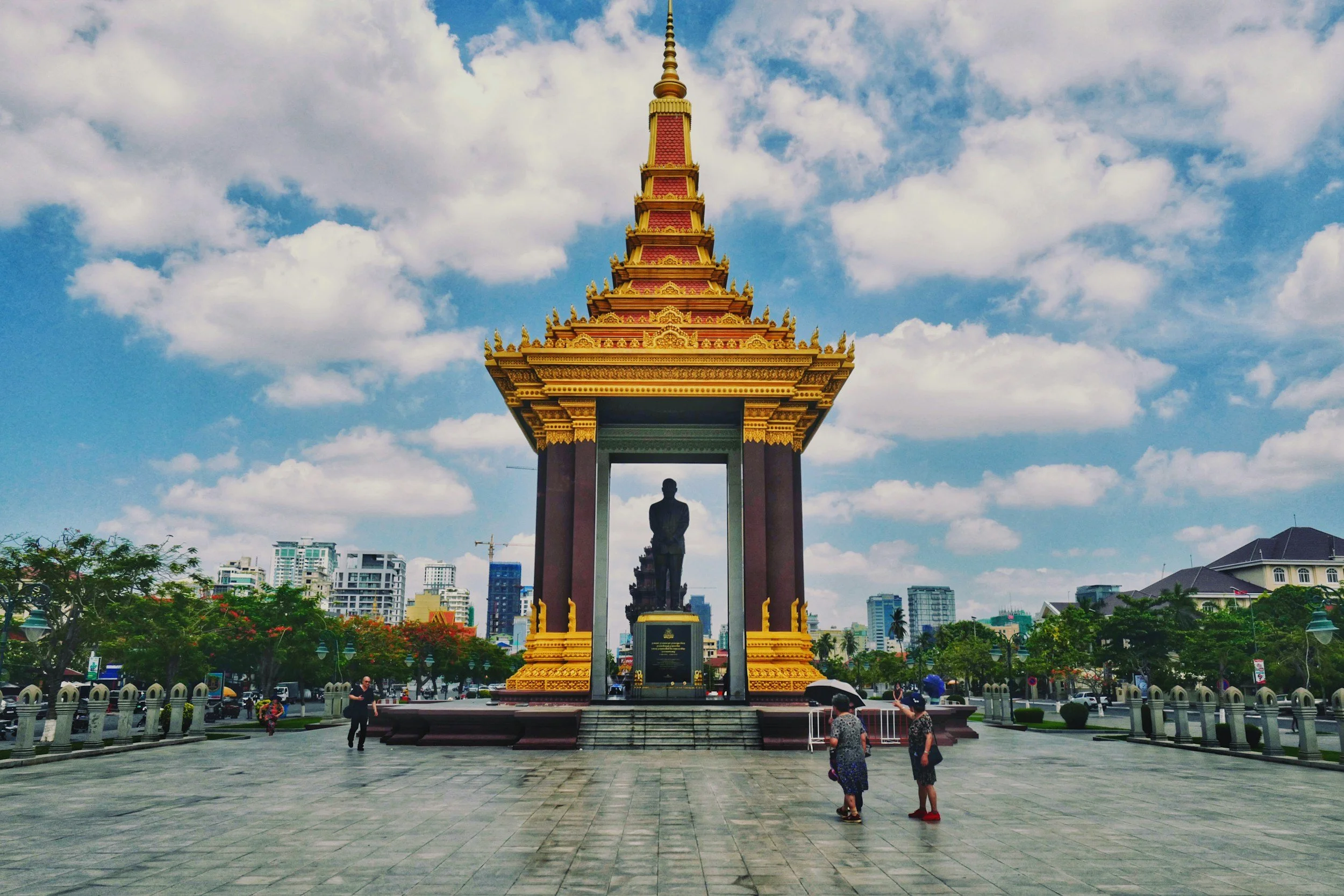
Cambodia's capital is busier, grittier, and more contemporary than Siem Reap, but it provides essential context for understanding the country.
Visit the Royal Palace and Silver Pagoda
The ornate Royal Palace provides a glimpse into Cambodia's royal heritage, while the neighboring Silver Pagoda houses important religious treasures and thousands of silver floor tiles.
Understand Cambodia's Khmer Rouge History
A visit to Tuol Sleng Genocide Museum, the former S-21 prison, and the Choeung Ek Genocidal Center, commonly known as the Killing Fields, is emotionally difficult but historically important.
I would recommend approaching both with adequate time and avoiding packing too much sightseeing around them.
Explore the National Museum
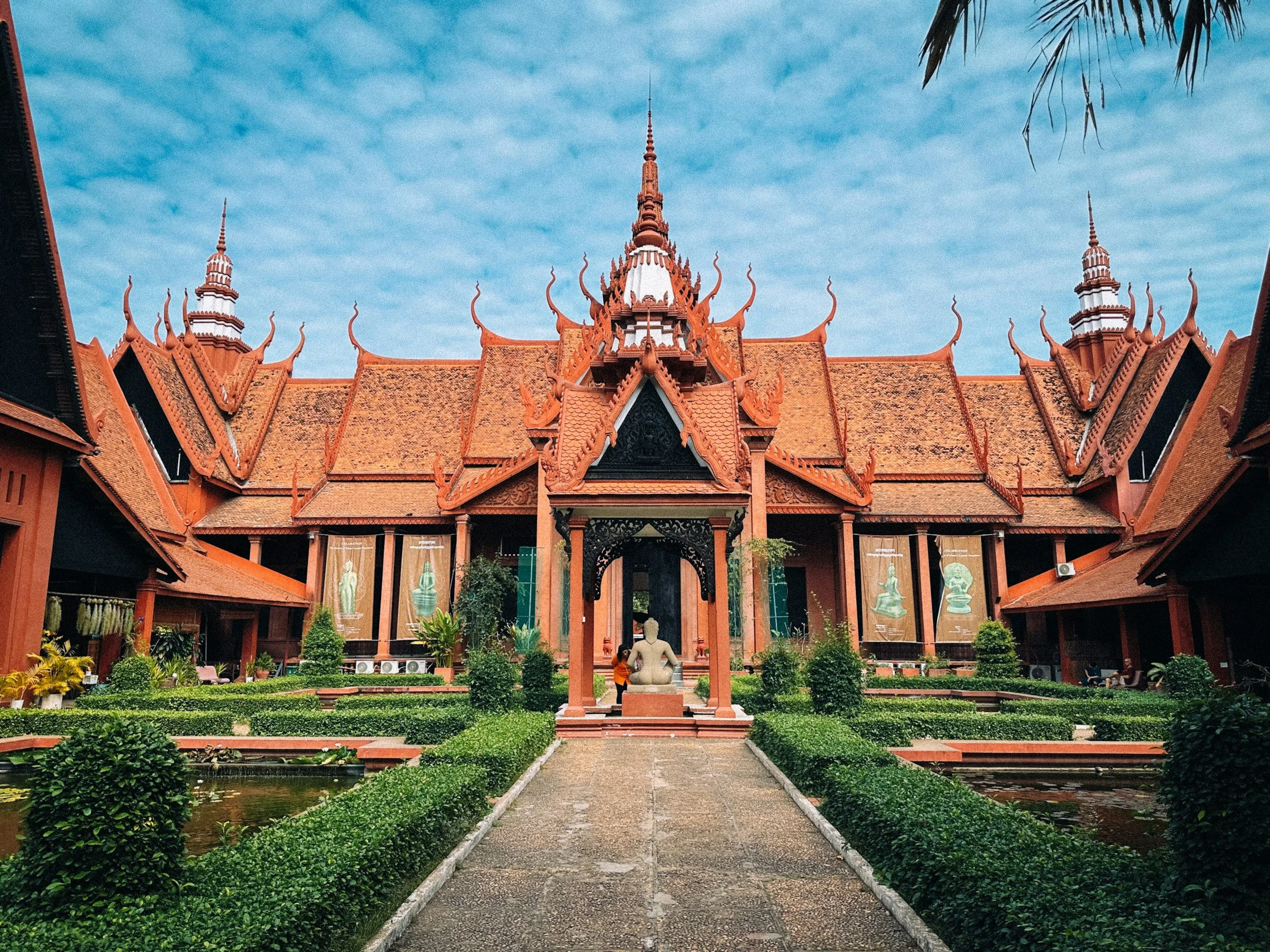
The National Museum of Cambodia is particularly worthwhile for travelers fascinated by what they have seen at Angkor. Its extensive collection of Khmer art and sculpture provides additional context for the temples and religious traditions found throughout the country.
Experience Modern Phnom Penh
Spend time along Sisowath Quay, explore the Art Deco Central Market, wander the stalls of the Russian Market, and discover Phnom Penh's growing collection of cafés, restaurants, rooftop bars, and cocktail lounges.
For something quieter, venture to Koh Dach, or Silk Island, where traditional weaving communities offer a change of pace from the capital.
What to Eat and Drink in Cambodia
Cambodian food doesn't always receive the international attention of neighboring Thai or Vietnamese cuisine, but exploring it is one of the pleasures of traveling here.
One dish to seek out is fish amok, a fragrant fish curry traditionally flavored with kroeung, coconut milk, and aromatics.
For breakfast, try nom banh chok, often called Khmer noodles. Rice noodles are served with a fragrant fish-based gravy and an abundance of vegetables and herbs. Cambodia's Ministry of Tourism describes the dish as one of the country's oldest living recipes.
Other dishes and drinks worth trying include:
Kuy teav: A comforting pork or beef broth noodle soup served with herbs, bean sprouts, lime, and fried garlic.
Tuk-a-lok: A refreshing Cambodian fruit shake commonly made with tropical fruit, condensed milk, and crushed ice.
Palm wine: A traditional drink produced from the sap of sugar palms and lightly fermented.
Cambodian cuisine is also increasingly being reinterpreted by a new generation of chefs, making Siem Reap and Phnom Penh particularly interesting destinations for travelers who plan trips around food.
Where to Eat and Drink in Cambodia
Siem Reap
For an elevated introduction to modern Khmer cooking, Cuisine Wat Damnak is one of the country's most celebrated dining experiences, using Cambodian ingredients and culinary traditions through a contemporary lens.
Chanrey Tree is another strong choice for refined Khmer cuisine in a beautiful garden setting, while Sister Srey Café works well for a casual breakfast or lunch.
Coffee lovers should make time for The Little Red Fox Espresso, and Gelato Lab makes an easy afternoon stop between sightseeing.
For drinks, Elephant Bar at Raffles Grand Hotel d'Angkor delivers old-world atmosphere, while Miss Wong Cocktail Bar offers something moodier and more intimate.
Phnom Penh
In the capital, Topaz has long been associated with classic French fine dining, reflecting Cambodia's French colonial influences.
For something more relaxed, Wild offers cocktails and inventive spring rolls in a lush garden environment, while Le Langka brings an intimate neighborhood feel.
End an evening at Sora at Rosewood Phnom Penh, where sweeping skyline views make it an excellent spot for sunset cocktails.
Cultural Celebrations and Events in Cambodia
Cambodia's calendar is filled with celebrations influenced by Buddhist, Hindu, and royal traditions. Timing a trip around one can add an entirely different dimension to the experience.
Khmer New Year | April
One of the country's largest celebrations, Khmer New Year marks the end of the traditional harvest season with temple visits, family gatherings, games, celebrations, and festivities throughout the country.
Royal Ploughing Ceremony | May
This centuries-old royal tradition ceremonially marks the beginning of the rice-growing season.
Pchum Ben | September or October
One of Cambodia's most important religious observances centers on honoring deceased relatives. Families visit pagodas, present offerings, and participate in Buddhist traditions over the festival period.
Bon Om Touk, or Water Festival | November
One of the country's most exciting celebrations marks the changing flow of the Tonlé Sap River with boat races and festivities, particularly in Phnom Penh.
Independence Day | November 9
Cambodia commemorates its 1953 independence from France with official ceremonies and celebrations.
Because several Cambodian festivals follow lunar calendars, exact dates vary from year to year.
How Many Days Do You Need in Cambodia?
For most first-time visitors, I would recommend four to seven days.
With four days, base yourself in Siem Reap and dedicate the trip primarily to Angkor and the surrounding region.
With six or seven days, combine three to four nights in Siem Reap with two or three nights in Phnom Penh. This creates a much more complete introduction to Cambodia by balancing the grandeur of its ancient civilization with its royal, colonial, and modern history.
For travelers coming all the way from the United States, however, I would rarely recommend visiting Cambodia entirely on its own. It fits beautifully into a longer Southeast Asia itinerary.
Trips to Add On to Cambodia
One of Cambodia's greatest advantages is how easily it can become part of a larger journey.
Thailand
Pair Cambodia's ancient temples with Bangkok's restaurants and rooftop bars before slowing down at a luxury beach resort in Koh Samui or Phuket.
This combination works particularly well for honeymooners because Cambodia provides the adventure and cultural immersion, while Thailand can provide the relaxing finish.
Vietnam
For travelers prioritizing food and culture, Cambodia and Vietnam are a natural combination.
Continue to Ho Chi Minh City for energetic streets and exceptional dining or travel farther north to Hoi An for atmospheric lantern-lit evenings, historic architecture, and a slower pace.
Laos
Travelers who want to maintain a quieter, more spiritual atmosphere can continue into Laos. Luang Prabang, in particular, pairs beautifully with Siem Reap through its temples, Buddhist traditions, surrounding mountains, and slower rhythm.
Singapore
For the strongest contrast, add Singapore.
After Cambodia's jungle-covered ruins and historic streets, Singapore offers futuristic architecture, immaculate gardens, luxury hotels, celebrated restaurants, and one of Asia's most exciting culinary scenes.
Hong Kong
Hong Kong adds another high-energy city option, with its dramatic harbor skyline, exceptional dim sum, shopping, cocktail culture, and luxury hotels providing a completely different experience from Cambodia.
If Not Cambodia...
If the ancient temples and archaeological discovery are what initially drew you toward Cambodia, there are several destinations around the world worth considering.
Machu Picchu, Peru trades Cambodia's tropical jungle for dramatic Andean peaks, with an extraordinary 15th-century Incan citadel perched high among the mountains.
Tikal, Guatemala provides perhaps the closest sense of jungle discovery, with towering Maya temples rising above the rainforest canopy.
Borobudur, Indonesia offers another extraordinary Southeast Asian archaeological experience. The enormous 9th-century Buddhist monument is particularly compelling for travelers interested in religious history and sacred architecture.
Petra, Jordan replaces jungle with desert, where elaborate Nabataean monuments emerge from rose-colored sandstone cliffs.
Egypt delivers archaeology on an entirely different scale, from the Pyramids of Giza to the tombs and temples of Luxor.
And Chichén Itzá, Mexico offers another fascinating look at the relationship between ancient architecture, religion, astronomy, and sophisticated urban civilizations.
Is Cambodia Worth Visiting?
Absolutely, but Cambodia is best suited to travelers who want more from a trip than simply beautiful scenery.
Come for Angkor Wat, but stay long enough to understand what surrounds it.
Explore temples before the heat of the day. Watch the jungle slowly reclaim centuries-old stone. Learn about a civilization that once shaped much of Southeast Asia. Taste Khmer dishes you may never have encountered at home. Spend time with Cambodia's more difficult modern history. Then watch the country reveal a contemporary side through its restaurants, art, hospitality, and creative culture.
Cambodia can be especially powerful as one chapter of a larger Southeast Asian journey. Paired thoughtfully with Thailand, Vietnam, Laos, or Singapore, it introduces a layer of history and cultural depth that can completely change the character of the trip.
Planning a Trip to Cambodia?
A trip to Cambodia is one where thoughtful planning makes a significant difference. Choosing the right amount of time at Angkor, deciding whether Phnom Penh belongs in the itinerary, selecting knowledgeable private guides, and pairing Cambodia with the right neighboring destination can turn a straightforward Southeast Asia vacation into something far more memorable.
Aurelia Voyages can create a customized Cambodia and Southeast Asia itinerary built around your travel style, preferred pace, hotel preferences, and the experiences that matter most to you.
Start by completing my trip inquiry form and sharing what you're envisioning. From there, I can help determine the destinations, hotels, experiences, and routing that make the most sense for your trip.